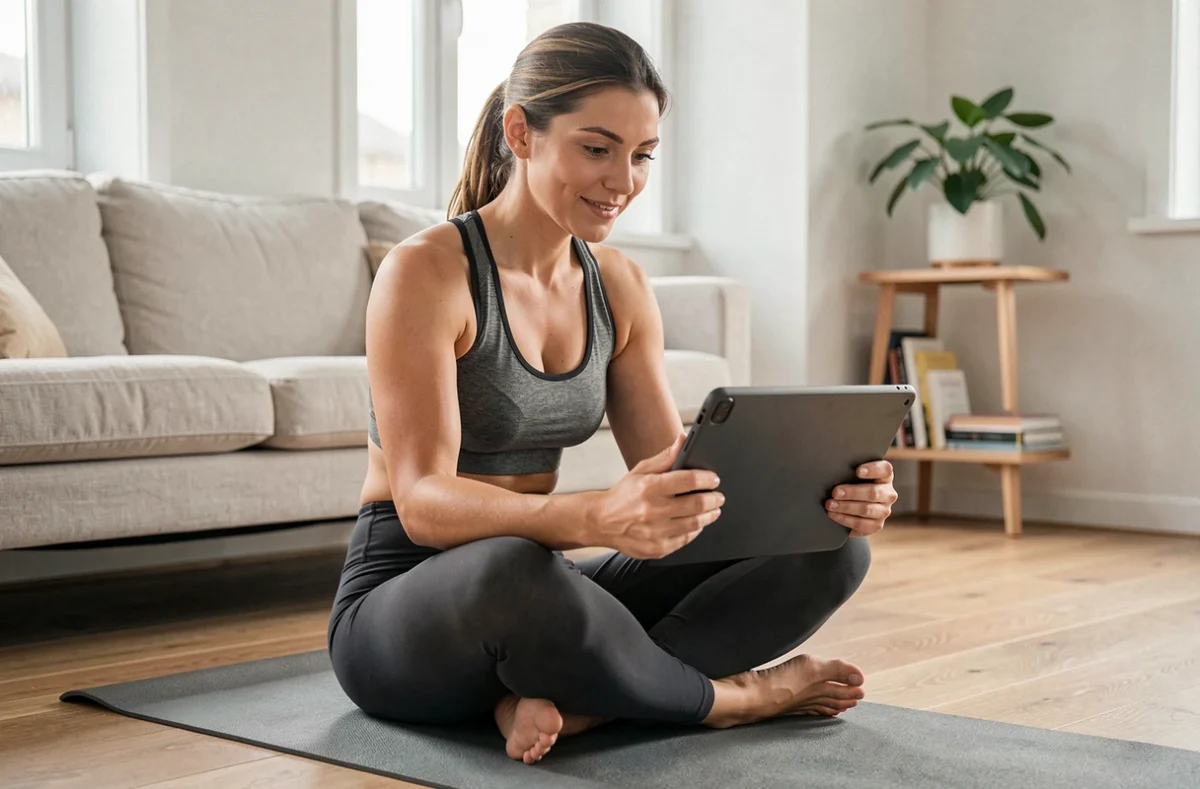
We schedule a strength training session on a Tuesday evening, the living room is cleared, the mat laid on the floor. Thirty minutes later, we have gone through three exercises without knowing if our posture was correct or if the load matched our level. Online sports coaching makes perfect sense at this precise moment: when the training already exists, but the guidance is lacking.
Online Coaching and Injury Prevention: What Remote Format Really Changes
Competitors often present remote coaching as a shield against injuries, without nuance. The reality on the ground is more nuanced. A synthesis of 31 randomized trials involving runners shows that only supervised programs with personalized feedback actually reduce the risk of injury. A generic plan sent by email, even signed by a qualified coach, is not enough.
Platforms like moncoachsportifenligne.fr structure this support around regular exchanges between the practitioner and the coach, which distinguishes active monitoring from a simple PDF file of sessions.
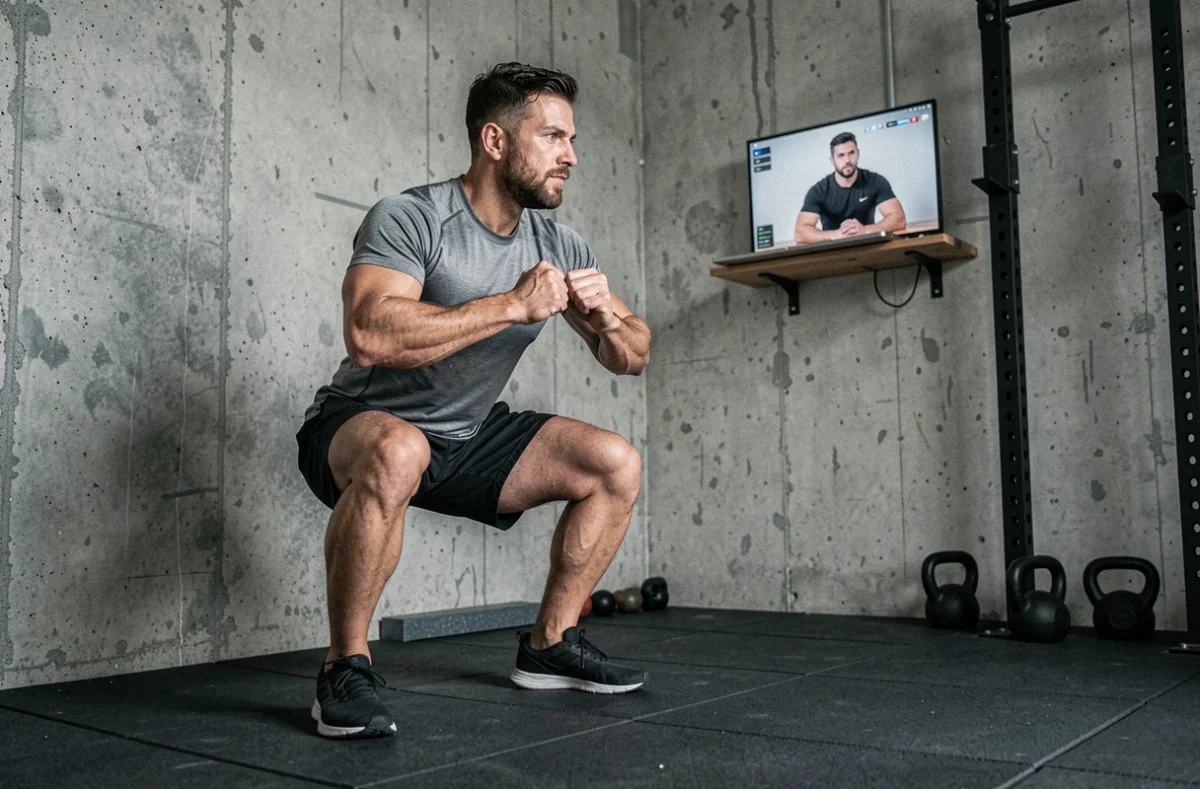
In practice, remote prevention works when the coach corrects via video or analyzes videos sent by the practitioner. Without this visual feedback, posture flaws in a squat or deadlift go unnoticed for weeks. Feedback varies on this point depending on the tools used, but the principle remains the same: coaching without regular feedback is just a distributed program.
Home Workout Sessions: Distinguishing Interactive Coaching from a Video Library
Opening a fitness app and starting a HIIT video is not coaching. It’s content consumption. The difference lies in three concrete criteria:
- The coach adjusts the programming from week to week based on feedback from the practitioner (fatigue, pain, progress on a specific exercise).
- The sessions incorporate a form of direct communication (video calls, voice messages, video annotations) and not just a fixed schedule.
- The volume and intensity evolve according to a defined cycle, not based on mood or an app’s algorithm.
A systematic review from 2025 reported by Level Up Gym confirms that active support makes a difference in medium-term results, where a self-directed program shows its limits after a few weeks. We stagnate, lose motivation, and give up.
Effective online sports coaching therefore relies on structured human exchange. A good coach asks questions, requests movement videos, and adapts exercises based on the equipment available at home. This feedback loop has nothing to do with a monthly subscription to a platform of recorded classes.
Artificial Intelligence and Sports Chatbots: Current Limits of Automated Coaching
Several applications now offer virtual coaches powered by artificial intelligence. The idea is appealing: constant availability, reduced cost, instant responses. On the ground, the results are more mixed.
A systematic review from 2025 involving seven randomized trials dedicated to lifestyle habit chatbots concludes that their effectiveness remains uncertain despite good user acceptability. We appreciate the tool, we willingly use it, but measurable changes in physical condition do not reliably follow.
The main problem is the lack of contextual judgment. A chatbot does not detect a knee compensating during a forward lunge. It does not perceive fatigue in the voice or discouragement after a tough week. Sports coaching remains a profession of body reading and real-time adaptation, two skills that automation does not yet cover.
For a practitioner who is starting out or returning to sports after an injury, it is better to have a human coach remotely than a robot available at all times. AI can complement the setup (reminders, basic nutritional tracking), but it does not replace the diagnosis of a trained professional.

Health Data and Online Coaching: The GDPR Framework to Check Before Committing
We share sensitive information with our online coach: weight, measurements, injury history, sometimes heart data from a connected watch. This data falls under GDPR and, in some cases, health data regulations.
Points to Check Before Choosing a Coaching Platform
- The platform must clearly indicate where and how the data is stored. Certified HDS (Health Data Host) hosting is required as soon as strictly health data is processed.
- The coach must have general terms of sale mentioning the processing of personal data, in accordance with the obligations applicable to unregulated liberal professions.
- The practitioner must be able to request the deletion of their data at any time, and the platform must respond within a reasonable timeframe.
Most competitors do not address this aspect. We sign up, fill out a detailed health questionnaire, and do not know who accesses this information or how long it is retained. Checking the data protection framework before sharing one’s medical history with an online coaching platform is not an administrative detail.
Online sports coaching truly transforms the training routine when it relies on human follow-up, concrete feedback on technique, and adjusted programming. Without these elements, we are left facing a screen with a fixed program. Technology facilitates access to the coach; it does not replace them.