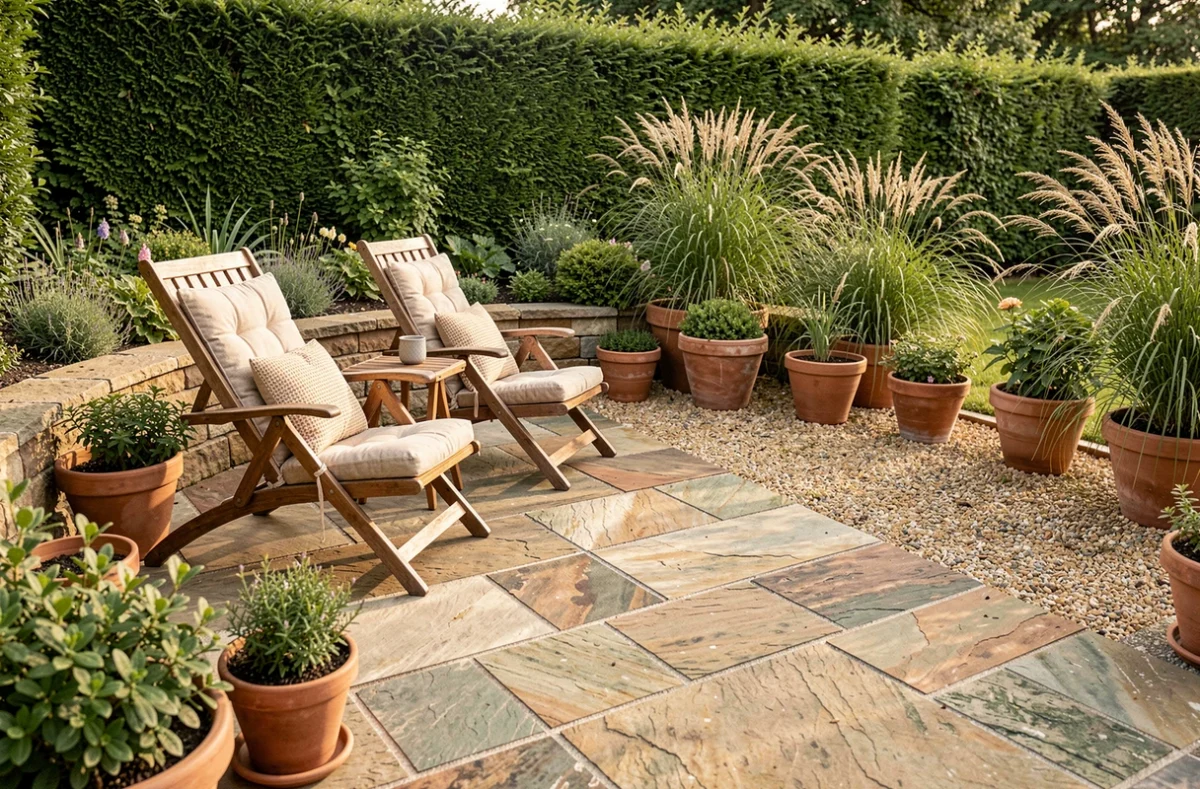
A successful garden design is built on a technical foundation that most inspiration articles overlook: the soil, zoning regulations and drainage across the property. Before choosing furniture or a planting scheme, these constraints determine what is actually feasible on your land.
Managing rainwater and impermeable surfaces in the garden
Every patio, paved path or pool surround increases the impermeable surface area of the property. The local PLU or PLUi may require rainwater to be absorbed on site or limit the discharge rate into the stormwater network. Failing to check these rules before pouring a concrete slab could mean a compliance issue during an inspection or when selling the property.
The most coherent solution is to incorporate a rain garden into the overall plan. In Rilly-la-Montagne, transforming an asphalt courtyard into a planted space helped rainwater soak into the ground while lowering the perceived temperature in summer. This type of feature combines a climate function (cooling and runoff control) with genuine landscape value.
In practice, a rain garden is placed at the lowest point of the site, where water naturally collects. Plant it with perennials that tolerate alternating wet and dry conditions (marsh irises, sedges, purple loosestrife). The result looks like a traditional flower bed, but it performs a drainage function that neither a lawn nor a wooden deck can provide.
We recommend checking your municipality’s stormwater zoning before even drawing up a plan. A professional specialising in garden design by Jardindivert takes these constraints into account from the design stage, helping you avoid costly rework after construction.
Choosing patio materials: wood, natural stone or composite
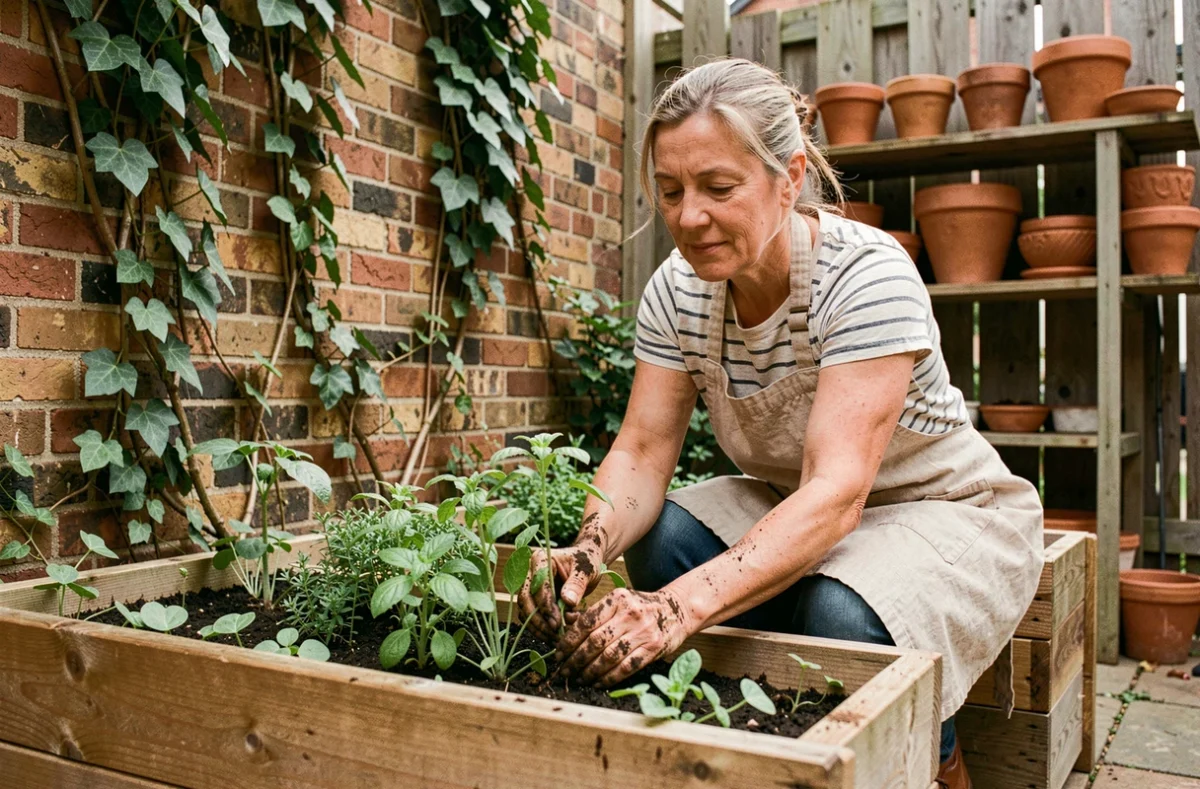
Your patio material affects maintenance, durability and thermal comfort in your outdoor space. Each option has specific technical considerations.
- Class 4 timber (pressure-treated pine, ipé, cumaru): resistant to constant moisture and suitable for patios on pedestals. Ipé naturally weathers to a silvery grey without treatment, which may or may not suit your taste. An annual application of wood saturator preserves its original colour.
- Natural stone (travertine, sandstone, quartzite): high thermal mass, meaning it releases heat in the evening. An advantage in the shoulder seasons, but dark shades can be uncomfortable underfoot in midsummer. Laid on a stabilised sand bed or on pedestals.
- Composite (wood-polymer): does not turn grey and requires no oiling or sanding. Entry-level boards get hotter on the surface than solid wood. Check the composition (actual wood content and whether recycled PVC is used) to assess its longevity.
Appearance alone should not determine your choice. A south-facing sloping site calls for a different material than a shaded patio in a damp area. The type of subsoil (clay, sand or fill) also determines the foundation required.
Outdoor lighting and regulations on light pollution
Garden lighting is about more than placing solar spotlights along a path. The decree of 27 December 2018 regulates light pollution, and some municipalities enforce night-time switch-off rules that also apply to private lighting visible from public spaces.
For a garden, follow the same principles as for public spaces: direct light sources towards the ground, limit brightness to areas where people walk and switch lights off after use.
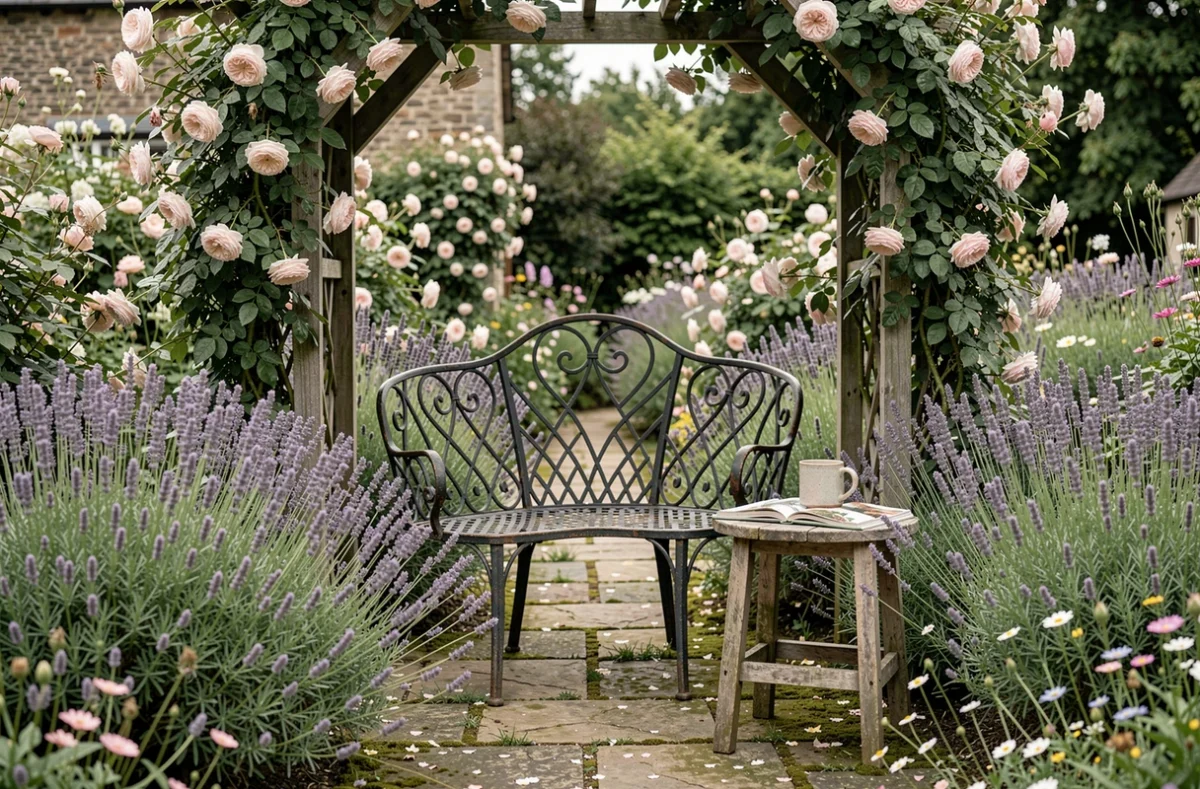
An effective landscape lighting plan distinguishes between three levels:
- Low-level path lighting (30–50 cm bollards) for walkways, with motion sensors to limit how long the lights stay on.
- Ambient uplighting for one or two statement plants (olive tree, Japanese maple), switched off by a timer after a set period.
- Task lighting for the patio or outdoor kitchen, operated manually and directed strictly at the worktop or table.
This approach reduces energy use, protects nocturnal biodiversity and complies with regulations. Well-designed lighting enhances the garden without disturbing the neighbours.
Choosing plants suited to your garden’s climate and soil
Planting without knowing your soil type leads to repeated failures that are often wrongly blamed on insufficient watering. Clay soil retains water and suffocates lavender roots. Sandy soil drains so quickly that hydrangeas start to suffer as early as June.
The first practical step is a texture test: take a handful of damp soil and try to roll it into a sausage shape. If it holds together, the soil is clay. If it crumbles, it is sandy. Somewhere in between, it is silty. This free assessment will guide your entire planting scheme.
For gardens exposed to summer drought, dry-garden plants (rockroses, gaura, feather grass) reduce watering to just a few applications in the first year. Once established, they survive without intervention. This type of landscaped garden requires less maintenance than a traditional lawn while offering a structured design and flowers over several months.
Mineral mulch (gravel, pozzolana) complements this approach by reducing evaporation and eliminating the need for weeding. Organic mulch (wood chips) is better suited to shaded beds where cool, humus-rich soil is desirable.
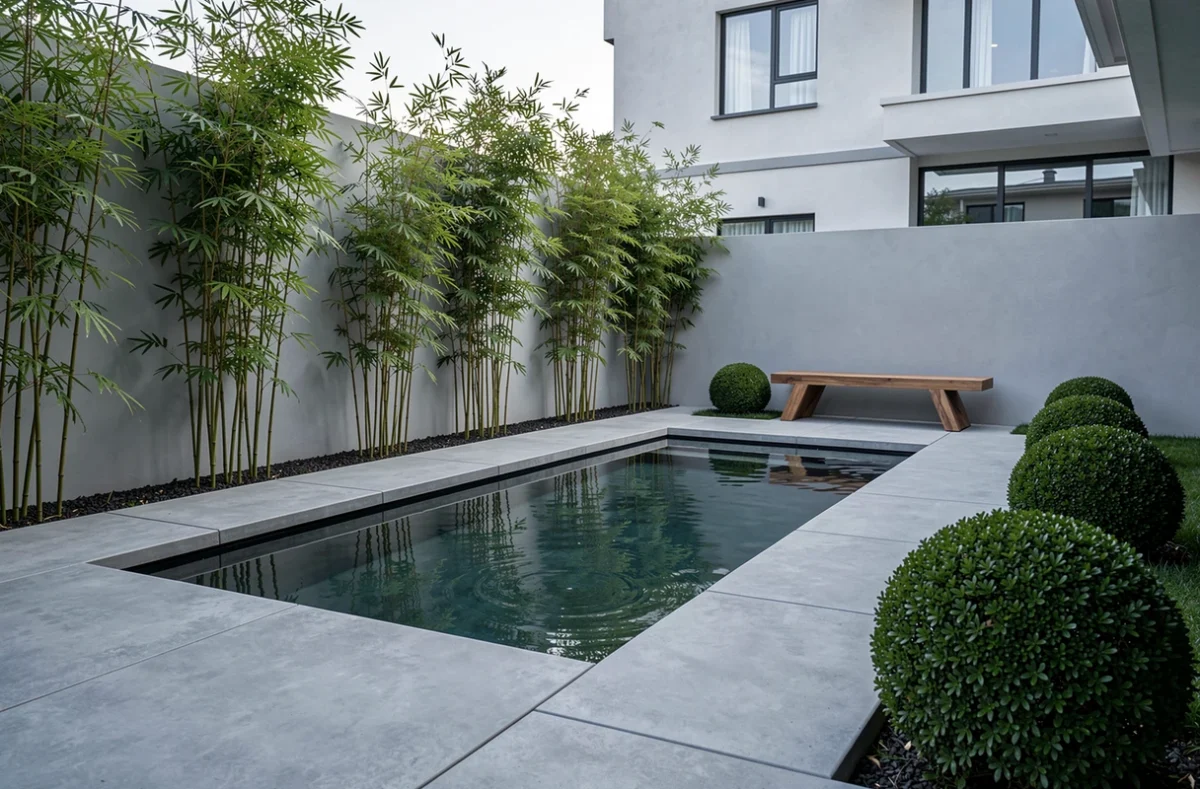
Designing an outdoor space that reflects your style involves technical decisions as well as aesthetic ones. The property’s stormwater zoning, patio materials suited to its exposure, lighting that complies with regulations and plants selected for the soil type all provide a foundation that visual inspiration alone cannot. These decisions, made early on, are what distinguish a lasting garden from a fleeting backdrop.