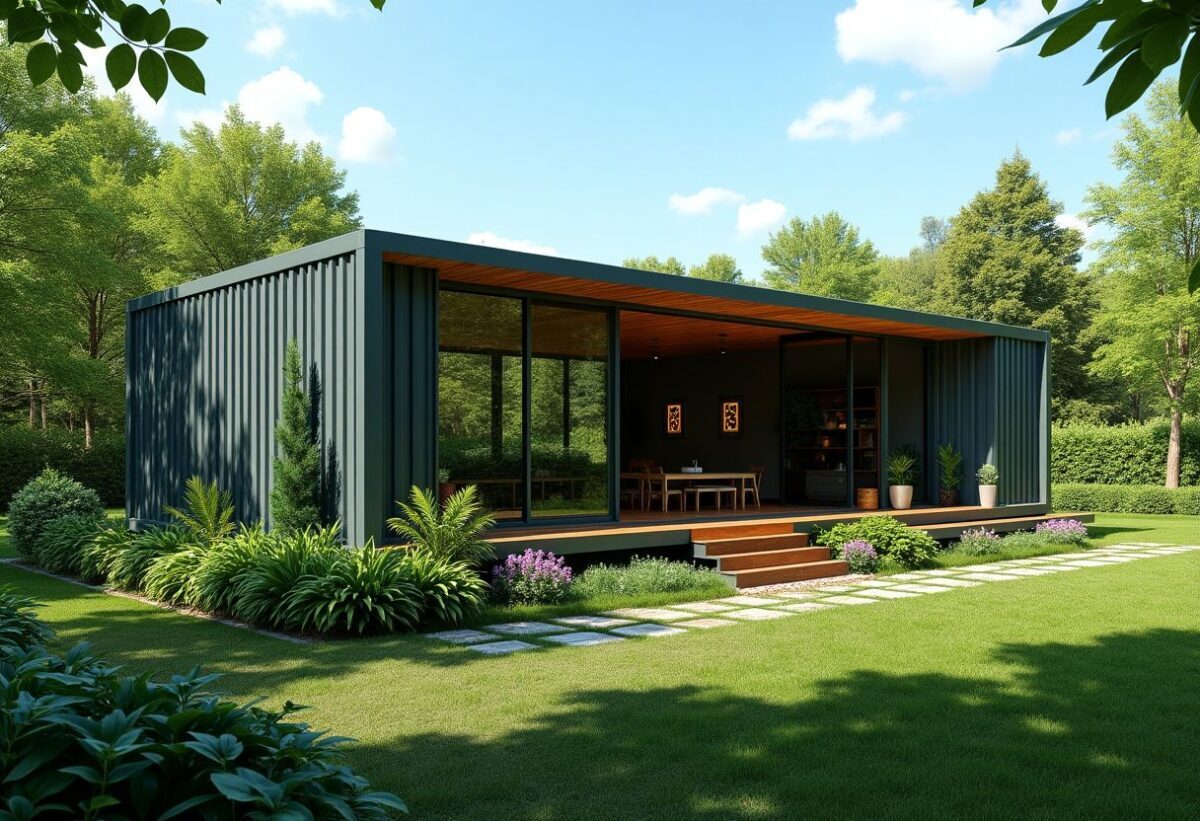
Shipping containers, those steel giants once solely dedicated to transporting goods across the globe, are experiencing a true reinvention. They are transforming into modern homes, innovative offices, pop-up shops, and much more. Their robustness and modularity make them ideal materials for visionary architectural projects. Beyond this aspect, their affordable cost and relatively low environmental impact attract a growing number of enthusiasts.
The advantages of buying containers
Investing in a shipping container comes with numerous advantages that are not always immediately apparent. The enthusiasm for these structures is based on unique characteristics that meet contemporary needs.
- Durability and resistance: Containers are designed to withstand the most extreme weather conditions. Made from Corten steel, they are naturally resistant to corrosion and structural damage.
- Extreme modularity: These structures allow for various configurations. Stack them, juxtapose them, create customized spaces that meet your specific requirements.
- Financial savings: Compared to traditional building materials, the cost of containers is generally lower. This allows for substantial savings on a residential or commercial project.
- Ecological commitment: Recycling a container to create a living or working space reduces the need to extract new resources and decreases the overall ecological footprint.
Key steps for buying a container
Starting the process of buying containers may seem daunting at first, but with a good plan, the process becomes smoother. Here’s how to navigate this process effectively.
First, clearly define your needs. Do you need a container for a residential construction project, commercial use, or for storage? Once your purpose is clarified, it is crucial to research the various types of containers available, ranging from the standard 20-foot size to the more spacious 40-foot options. Next, it is vital to ensure that the chosen container is in good condition. Inspect carefully for any signs of rust, dents, or structural damage.
Choosing the right supplier is also an essential step. Look for reputable sellers who offer not only quality products but can also provide warranties and effective after-sales service. Consider logistical aspects such as the transportation and delivery of your container to the intended site.
Creating a living space: the architectural possibilities of containers
Containers are no longer just storage tools; they are becoming masterpieces of modern and sustainable architecture. Architects and designers are pushing the boundaries of creativity by using these structures as the basis for their works.
The flexibility of containers allows for the construction of unique homes, often composed of multiple units assembled to create spacious and diverse living areas. Advanced insulation materials and eco-energy solutions integrate seamlessly with container structures, ensuring comfort and durability. Incorporating openings such as panoramic windows or rooftop terraces fosters a harmonious connection between the interior and exterior.
Design enthusiasts will find in the use of containers an opportunity to create minimalist yet functional spaces that meet contemporary aesthetic standards. Finally, this enthusiasm for modular structures demonstrates a paradigm shift towards more sustainable and economically viable housing solutions.
Financial and legal considerations
While the idea of buying a container may seem appealing, it is crucial to consider certain financial and legal aspects to ensure the success of your project.
From a financial perspective, accurately assessing the total budget is essential. In addition to the cost of acquiring the container, you must also include transportation fees, fitting costs, and possibly costs related to infrastructure development. Funding for this type of project is available but often requires rigorous planning.
From a legal standpoint, each region or country has its own regulations regarding the use of containers as habitable structures. It is imperative to check local building codes and ensure that all necessary permits are obtained before starting any work. Adhering to current legislation avoids legal complications and ensures that your construction is safe and compliant with standards.