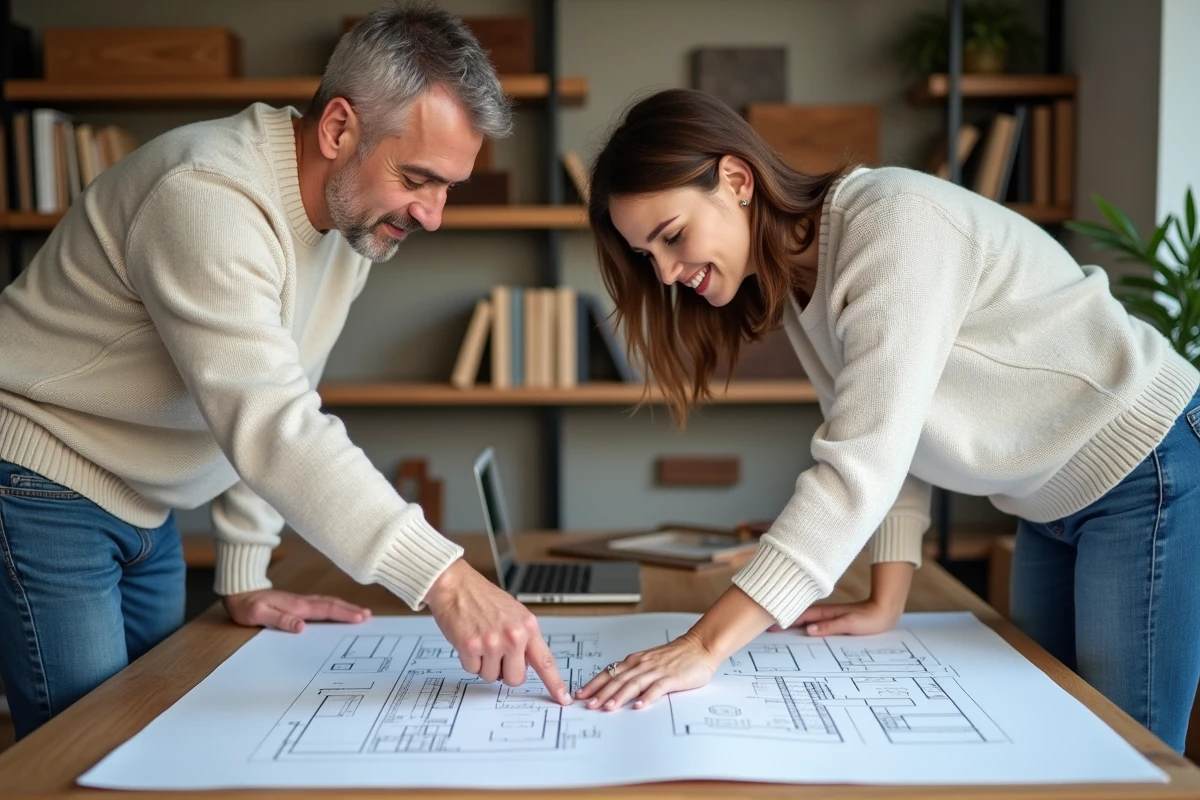
A custom home is defined by the complete adaptation of the building to the uses, the land, and the regulatory constraints of the project owner. This type of project mobilizes several skills simultaneously (architecture, engineering office, craftsmen) and generates technical trade-offs from the very first sketches. The challenge lies not in drawing an attractive plan, but in the ability to maintain coherence between this plan, the approved budget, and the current regulatory obligations.
RE2020 and custom construction: what the regulations change in your choices
The environmental regulation RE2020 is now the central axis of designing a new home. The usual content on custom construction details the project stages or aesthetic customization at length. They rarely address how this standard concretely influences the plan, the choice of materials, and even the orientation of living spaces.
RE2020 imposes three simultaneous requirements: the energy performance of the building, the reduction of its carbon footprint over its entire life cycle, and summer comfort without systematic reliance on air conditioning. In practice, these three pillars translate into significant architectural decisions. The orientation of the windows, the thickness and nature of the insulation, the type of heating system, and even the choice between wood frame and concrete block: everything partly stems from this regulatory framework.
For those wishing to build with Bâtir Architecte and maisonluminea fr, this constraint becomes a design lever. A project anchored from the sketch stage on the RE2020 thresholds avoids costly revisions during the execution phase when a thermal engineering office belatedly signals a compliance issue.
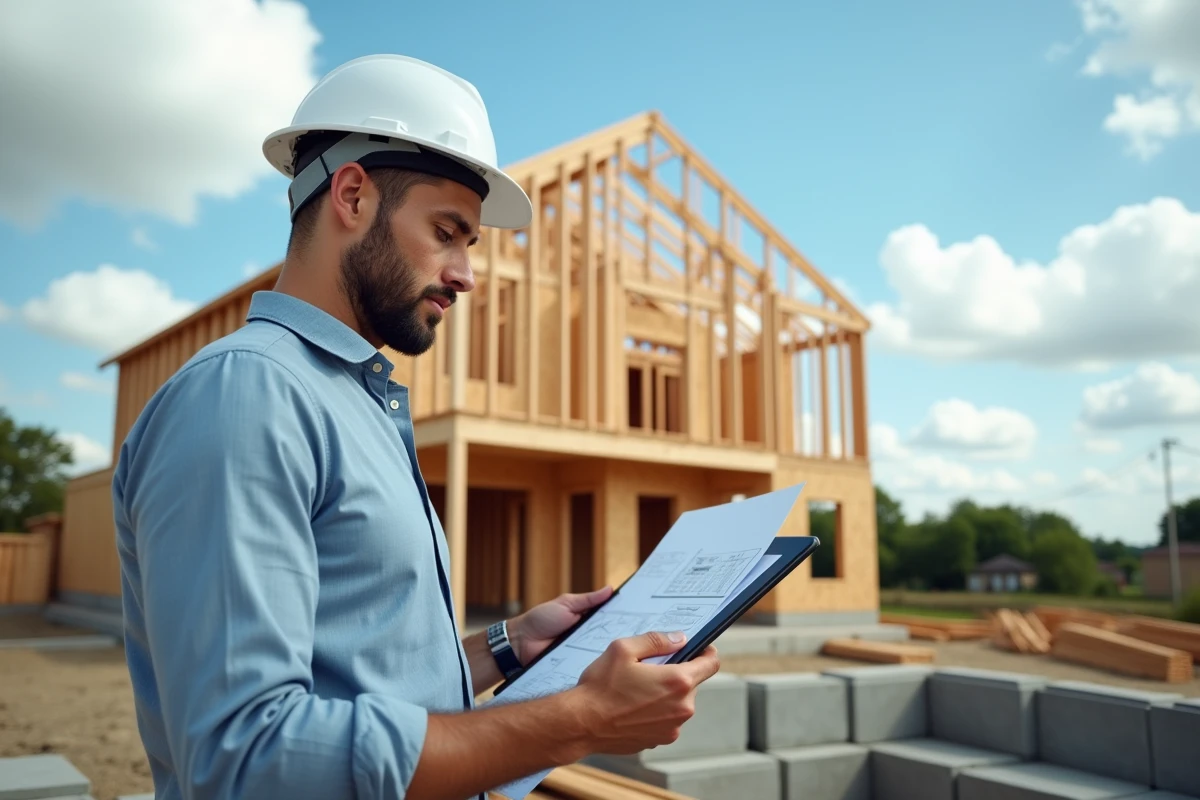
Gap between architectural dream, actual budget, and land constraints
The main risk of a custom home is not a poor plan. It is the gradual gap between the dreamed project and the trade-offs imposed by reality. This gap widens at three distinct levels, often simultaneously.
The land dictates more than one might think
A sloping plot, a narrow parcel, or clay soil radically alters the possible layout. The local urban planning plan (PLU) adds its own constraints: mandatory setbacks, maximum height, limited footprint, parking requirements. A project designed without prior consultation of the PLU and without a soil study often ends up being redesigned in a rush after the building permit is submitted.
The budget absorbs regulatory unforeseen events
Compliance with RE2020, soil studies, connection to networks, notary fees, and development taxes represent items that many project owners underestimate. The initial budget, often calibrated on the gross construction cost, ends up being reduced by these additional lines. The result: interior fittings (equipped kitchen, coverings, high-end joinery) are sacrificed or postponed.
To avoid this discrepancy, the financial framing must include all peripheral items from the start:
- Notary fees and development tax, calculated according to the municipality and the taxable area of the project
- The cost of servicing (connection to water, electricity, sanitation), which varies greatly depending on the distance from existing networks
- The mandatory technical studies (G2 soil study, RE2020 thermal study) and their possible additional prescriptions
- A safety margin for construction uncertainties, as no construction project goes exactly as planned
Coordination of stakeholders: the underestimated friction point
Field experience shows that a successful project depends as much on the coordination between the various stakeholders as on the quality of the initial plan. Custom construction involves an architect or project manager, a builder, a structural engineering office, a thermal engineering office, and several craft trades. Each works according to their own schedule, methods, and sometimes their own technical assumptions.
Errors in management during the construction phase are a frequent source of additional costs and delays. A common example: the architect plans a generous overhang on the facade, the structural engineering office requests a reinforcement that alters the thickness of the floor, and the craftsman in charge of the exterior joinery discovers upon arriving on site that the dimensions have changed.

This type of discrepancy arises from a lack of communication between stakeholders, not from individual incompetence. The solution involves a single point of contact (project manager or appointed builder) who centralizes the execution plans, validates each modification, and ensures that all trades work from the same version of the project.
Contractual responsibilities: knowing who guarantees what
The choice between a contract for individual house construction (CCMI) and a project management contract is not trivial. The CCMI offers a guarantee of delivery at the agreed price and deadlines, regulated by law. The project management contract allows for more architectural freedom but places the responsibility for any potential overruns on the project owner. This contractual choice must be made with full knowledge of the facts, before the first pencil stroke.
Custom house plan: the technical trade-offs that really matter
Rather than listing generic advice on the number of bedrooms or the size of the garage, three technical trade-offs deserve particular attention in a custom project.
- The choice between single-story and multi-story: a single-story consumes more land and foundations, while a multi-story reduces the footprint but increases structural costs and complicates future accessibility
- The positioning of wet networks (kitchen, bathroom, laundry): grouping them in the same area reduces the length of pipes, simplifies maintenance, and limits the risk of water damage
- The sizing of south-facing openings: too generous glazing degrades summer comfort despite winter solar gains, which RE2020 now penalizes through the bioclimatic needs indicator
These trade-offs are made during the preliminary project phase when modifications cost drawing time rather than poured concrete. Revisiting these choices during construction multiplies costs and delays disproportionately.
The last point to keep in mind is the overall timeline. Between signing the compromise for the land and handing over the keys, a custom construction project generally spans a long period, punctuated by unavoidable administrative phases (building permit processing, purging third-party appeals). Integrating these delays from the start avoids finding oneself in a situation of double burden (rent and loan payments) longer than expected.