
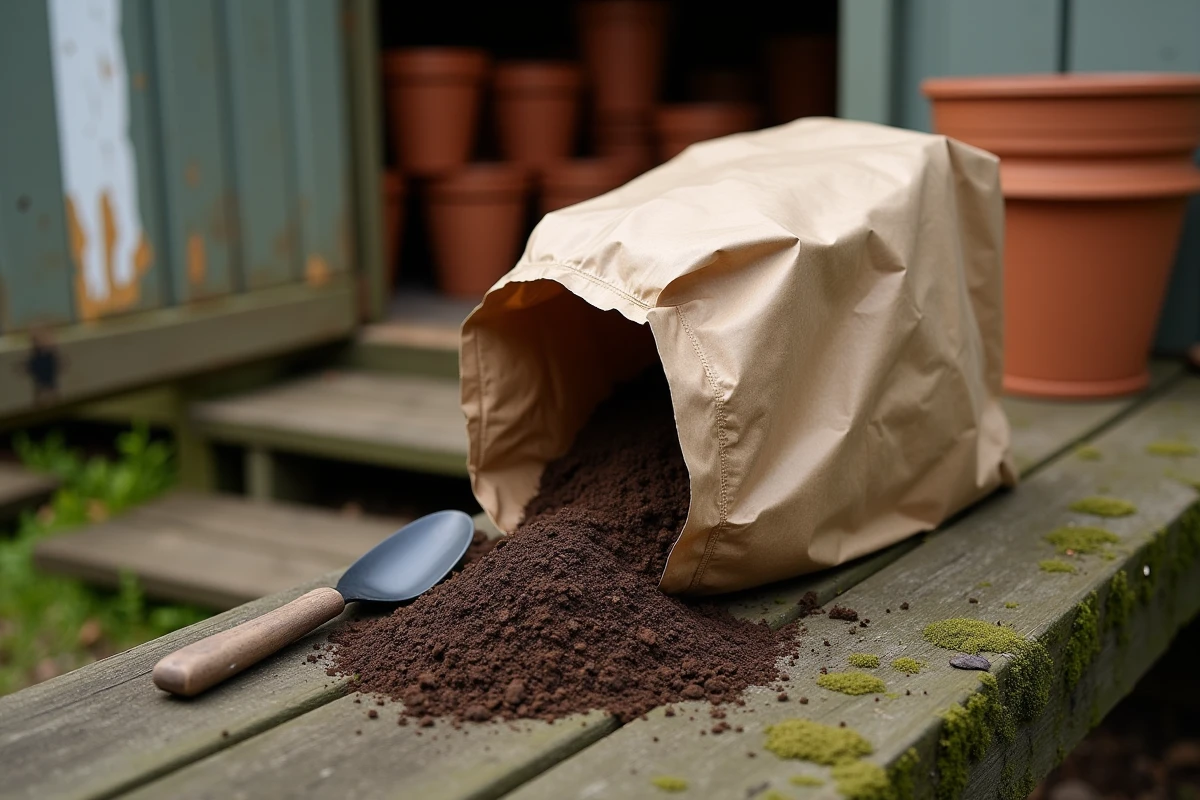
The dehydrated horse manure sold at Lidl is an organic amendment packaged in a bag, ready to use. Unlike fresh manure collected from equestrian centers, this product has undergone drying that reduces its volume, removes some weed seeds, and stabilizes its nutrient content. To gain real benefits in the garden, it is essential to understand the difference between an amendment and a fertilizer, adhere to the correct spreading schedule, and adjust the dosage according to the soil type.
Difference between amendment and fertilizer: what horse manure really brings to the soil
A fertilizer directly provides nutrients (nitrogen, phosphorus, potassium) to plants. An organic amendment, on the other hand, modifies the physical structure of the soil. Horse manure serves both roles, but its primary effect remains the long-term improvement of the soil.
The organic matter contained in the manure feeds the soil microorganisms: bacteria, fungi, and earthworms. These organisms decompose the matter into stable humus that retains water and nutrients. In clayey soil, manure lightens the structure and improves drainage. In sandy soil, it increases water retention capacity.
The nitrogen released by horse manure is said to be “slow”: it diffuses gradually as decomposition occurs. This gradual release limits losses through leaching, a common problem with soluble mineral fertilizers. Recent recommendations in organic gardening favor mature and stable amendments over quick nitrogen inputs to protect roots and preserve water quality.
Additional resources on the subject are available, particularly through the advice on Lidl horse manure on Jardindivert, which details the properties of this type of amendment.
Lidl dehydrated manure: spreading schedule according to the season
The timing of application radically changes the effectiveness of the manure. The Lidl product being dehydrated (and thus partially stabilized) behaves differently from fresh or simply composted manure.
Autumn spreading: the most effective period
Autumn remains the best window to incorporate horse manure into the garden. Spread on the soil after the last harvests, it decomposes slowly over the winter. In spring, the organic matter is integrated into the soil and nutrients are available for the first plantings.
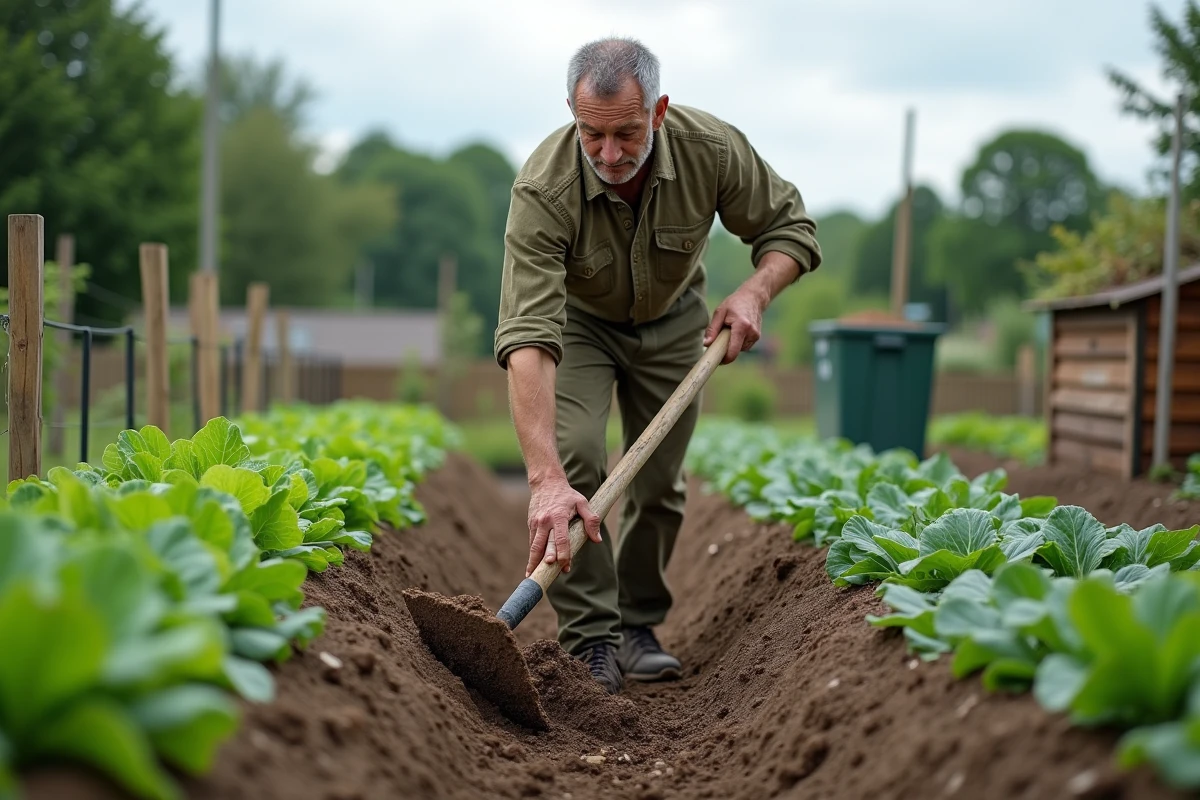
Simply spread a regular layer over the cleared plots, then lightly scratch the surface without turning the soil deeply. Winter rains and biological activity will do the rest of the incorporation work.
Spring use: precautions on dosage
A spring application is possible with dehydrated manure, as the drying process reduces the risk of root burn associated with fresh nitrogen. The product can be incorporated a few weeks before planting, mixed into the top few centimeters of soil.
For sensitive crops (carrot seeds, salads, radishes), it is better to space the application at least three weeks before planting. Nightshades (tomatoes, peppers, eggplants) and cucurbits (zucchini, pumpkins) tolerate a recent application much better.
Dosage of horse manure according to soil type and crops
Not all soils react the same way to an organic matter input. The dosage should be adjusted based on the soil texture and the type of plants being grown.
- Heavy clay soil: a moderate input is sufficient. Manure lightens the structure, but in excess, it can create pockets of poorly decomposed organic matter that hinder drainage.
- Sandy and draining soil: a more generous input is relevant. Organic matter acts like a sponge that retains water and nutrients in soil that naturally lets them drain away.
- Balanced loamy soil: a regular maintenance input, without forcing, maintains fertility year after year.
For nutrient-hungry crops (tomatoes, squashes, cabbages), horse manure is a valuable ally. These plants draw a lot of nitrogen and potassium during their growth. For legumes (beans, peas, broad beans), the input is less useful: these plants fix atmospheric nitrogen themselves thanks to the symbiotic bacteria present on their roots.
Common risks and mistakes to avoid with horse manure
Horse manure, even dehydrated, has pitfalls if the usage conditions are neglected.
The first risk concerns residual weed seeds. The industrial dehydration process reduces their viability but does not eliminate it entirely. By composting the dehydrated manure for a few weeks with other green waste before use, the heat generated in the pile eliminates the vast majority of remaining seeds.
The second common problem is overdosing. An excess of concentrated organic matter in an already rich soil can cause a temporary nitrogen deficiency: the microorganisms that decompose the carbon in the manure consume the available nitrogen, temporarily depriving the plants. This phenomenon manifests as yellowing of the lower leaves. The solution is to respect the dosages and not bury the manure too deeply.
The question of the source of the bedding also deserves attention. Some horse beddings contain treated shavings or residues from dewormers. Dehydrated manure packaged and sold in supermarkets usually meets the market standards for organic amendments, regulated in Europe by Regulation (EU) 2019/1009 on fertilizing products.
- Never use fresh manure directly in contact with the roots: the risk of burn is high.
- Store opened bags away from moisture to prevent the development of unwanted mold.
- Alternate types of amendments from year to year (homemade compost, manure, green fertilizers) to diversify soil inputs.
The dehydrated horse manure sold at Lidl offers a practical solution for gardeners who do not have access to bulk fresh manure. Its effectiveness primarily depends on adhering to the spreading schedule and adjusting the dosage for each plot. A regular autumn input, complemented by a rotation of amendments, maintains soil fertility without resorting to synthetic fertilizers.