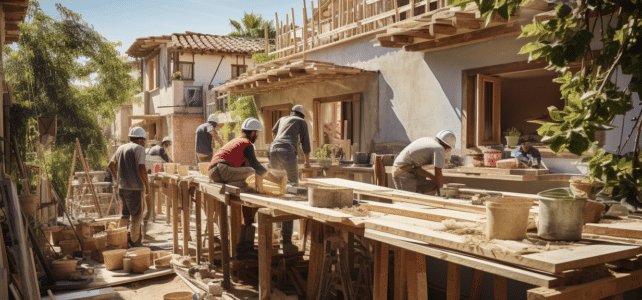
At a time when ecological urgency is at the heart of global concerns, architecture and building are seeking to reduce their carbon footprint. In this quest for sustainability, traditional construction methods such as rammed earth are experiencing a resurgence of interest. This technique, which involves compacting raw earth between formwork, offers a viable and ecological solution for the sector. Beyond rammed earth, other ancestral processes, such as adobe and dry stone, are being revisited by modern architects to create habitats that are both environmentally friendly and rooted in millennia of craftsmanship.
Ancestral eco-responsible construction techniques: a heritage to preserve and modernize
Raw earth, this humble and ancestral material, is today asserting itself as a response to contemporary challenges in sustainable architecture. Used for over ten millennia, it is recognized by UNESCO as common heritage of humanity, testifying to the universality and longevity of its use in construction. Networks such as CRAterre and associations like Asterre work to promote and innovate around this material. They contribute to the transmission of knowledge and the adaptation of ancestral methods to contemporary requirements, while preserving their eco-responsible essence.
At the heart of this renaissance is the work of Francis Diébédo Kéré, the African architect and winner of the Pritzker Prize and the Aga Khan Award for Architecture, illustrating the ability of raw earth to combine tradition and modernity. His emblematic project, the first school in Gando, is a model of rammed earth construction that respects the environment while being resolutely modern. It was the starting point for a series of projects in Gando, including housing for teachers, a library, a women’s center, a high school, and a training workshop, all demonstrating the sustainability and relevance of these practices.
Consider rammed earth construction not as a relic of the past, but as a solution for the future. A rammed earth house, with its massive walls and clean aesthetic, embodies a viable alternative to the standardization and environmental impact of modern constructions. It reminds us that ancestral techniques, far from being obsolete, are carriers of innovations and adaptations necessary for creating habitats that respect their environment and meet the needs of their inhabitants. In this perspective, earth architecture, far from being a vestige, proves to be a vector for the future, reconciling cultural heritage and the quest for a more harmonious development with nature.
Rammed earth and beyond: diversity and innovation in eco-responsible construction methods
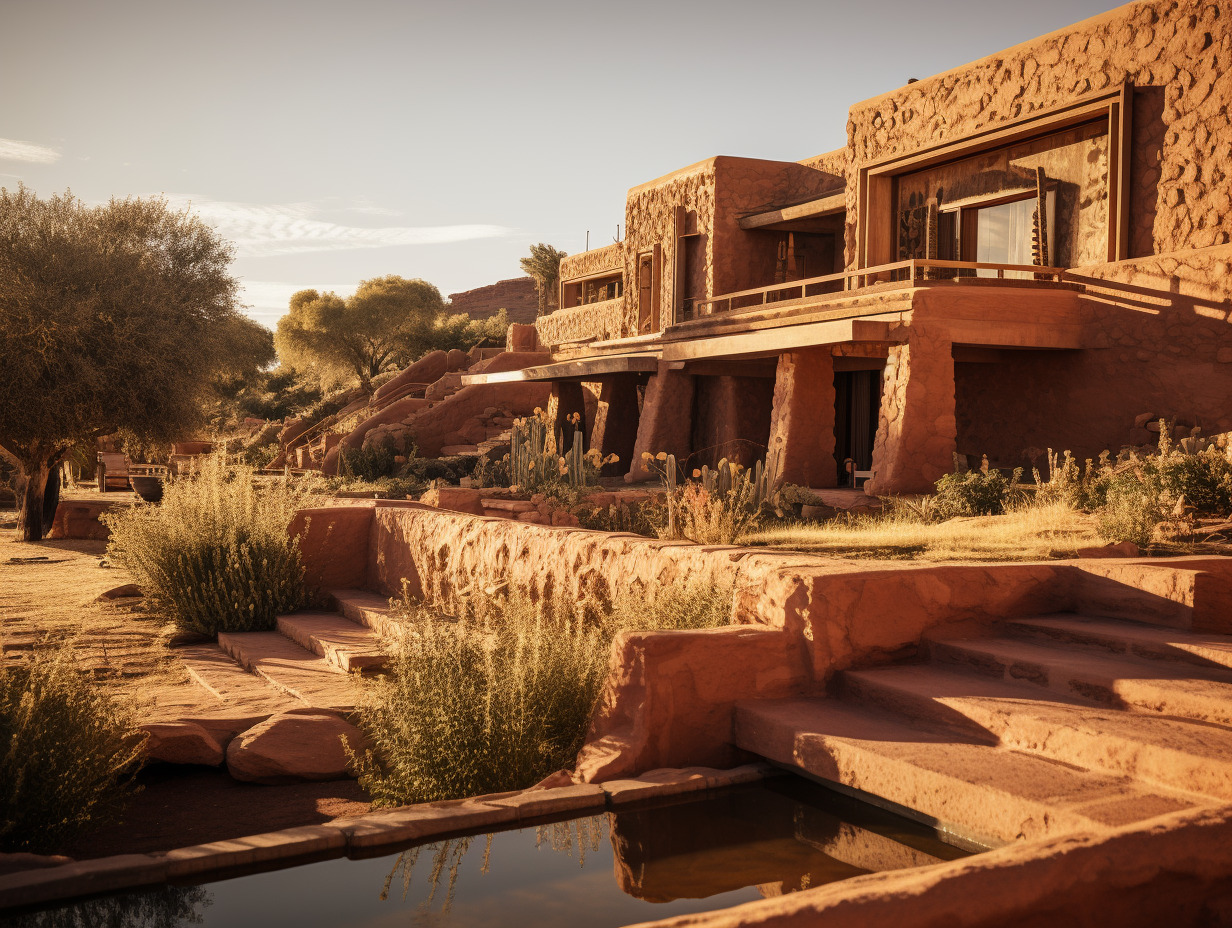
Rammed earth, this construction technique where earth is compacted between formwork, continues to assert itself as a eco-responsible reference. Beyond its traditional aspect, it inspires contemporary architects such as Mario Cucinella, who, with the ‘Maison Tecla’ project, is revolutionizing sustainable living by combining aesthetics and technological innovation. The reduced carbon footprint, natural thermal regulation, and design flexibility make rammed earth a relevant choice for the buildings of the future.
Yinka Shonibare also illustrates the richness of these revisited ancestral approaches. He is initiating an artist residency project in Ikise, Nigeria, which, while valuing earth as the main material, integrates elements of modern design. These spaces, designed to stimulate creativity, demonstrate that local materials and traditional techniques can be the fertile ground for an architectural renewal that respects the environment and cultural identity.
The agency Light Earth Designs, with the National Cricket Stadium of Rwanda, sets another milestone in the fusion of tradition and modernity. Their design philosophy, applied to a large-scale sports structure, uses local materials and construction methods that minimize environmental impact while creating a symbol of national pride.
Wang Shu, a Pritzker Prize winner, reinvents museum space with the contemporary museum of Ningbo. Here, architecture takes root in the cultural and material landscape of China, reinterpreting ancestral construction techniques to transpose them into a contemporary setting. These examples illustrate the emergence of a new architecture, where respect for the past and innovation intertwine to shape a more sustainable future.